How Do You Choose the Right Alcohol Treatment Center?
Updated: Sep 28

You are scrolling through treatment center websites at midnight, or during a lunch break where no one at work can see the screen. Every site says the same things: personalized care, expert staff, life-changing results. None of that tells you which one is actually right for your situation.
The right alcohol treatment center treats your specific pattern of drinking, screens for co-occurring conditions like depression or anxiety, holds real accreditation, and builds an aftercare plan before you arrive. Cost and location matter, but only after clinical fit is confirmed.
Below are six things that separate a strong alcohol treatment center from one that just photographs well. Working through them in order will tell you more than any homepage can.
In This Article
Start With Your Alcohol Use and Recovery Goals
Confirm Accreditation at Any Alcohol Treatment Center
Understand Your Levels of Care: Detox, Inpatient, and Outpatient
Ask How Personalization and Dual Diagnosis Care Actually Work
Look for a Real Aftercare and Relapse Prevention Plan
Weigh Cost, Insurance, and Location Honestly
How Chateau Approaches Alcohol Treatment
When to Seek Professional Help
Frequently Asked Questions
Start With Your Alcohol Use and Recovery Goals
Before you compare a single facility, get specific about your own drinking pattern. How often, how much, and for how long? Someone who has one dangerous binge every few months needs a different level of care than someone who drinks daily and cannot stop without medical support.
Next, be honest about anything else running alongside the drinking. Depression, anxiety, and unresolved trauma show up constantly in people who misuse alcohol, and treating the drinking without treating what sits underneath it rarely holds. Chateau's depression and anxiety program exists because that overlap is the rule, not the exception.
Write your goals down before you start calling centers. A short list of what recovery needs to look like for you keeps admissions calls focused instead of overwhelming.
This step is not about picking a facility yet. It is about knowing what you are shopping for, so the rest of your research has a target.
Confirm Accreditation at Any Alcohol Treatment Center
Accreditation is the one item on this list you should never skip. Look for The Joint Commission or CARF International accreditation, since both send independent surveyors to review clinical records, staff files, and outcomes before granting approval. Most major insurers require one of the two for network participation anyway.
Ask what license each clinical staff member holds. LCSW, LMFT, CADC, and a licensed medical team for detox are the credentials that matter here. A facility that hedges on staff qualifications, or changes the subject when asked, is telling you something.
Patient-to-staff ratio is just as important as the license itself. A facility running 12:1 or higher cannot give the individual attention that one running closer to 1:4 can offer. Ask for the exact number. Any legitimate alcohol treatment center will give you a straight answer.
Confirm these three things before anything else, and you eliminate most of the facilities that only look good in their marketing photos. This is the fastest filter for narrowing down which alcohol treatment center deserves a phone call.
Understand Your Levels of Care: Detox, Inpatient, and Outpatient
Alcohol withdrawal can be medically dangerous, unlike withdrawal from many other substances, so this section matters more here than it would for most other addictions. According to the National Institute on Alcohol Abuse and Alcoholism, symptoms such as tremors, a racing heart, or seizures during withdrawal are signs that medical supervision is not optional.
Ask directly whether medical detox happens on-site or whether you would need to transfer to a separate facility partway through treatment. That transfer point is exactly where a lot of people lose momentum and walk away from care. Chateau's residential detox program keeps medical detox and residential treatment under the same roof, with the same clinical team from intake through discharge.
Outpatient care can work for a milder drinking pattern with a stable home environment and no history of dangerous withdrawal. Residential, inpatient care is the safer and more effective choice once withdrawal risk, prior relapse, or a co-occurring condition enters the picture. The NIAAA Alcohol Treatment Navigator is a useful free tool for weighing these levels of care against your own history before you call anyone.
Matching the setting to the actual severity of the drinking, not to whichever program has an opening this week, is what makes the rest of treatment work.
Ask How Personalization and Dual Diagnosis Care Actually Work
A program that runs every client through an identical daily schedule is not personalizing anything, regardless of what the brochure says. Ask how your treatment plan gets built. Is it based on a clinical assessment specific to your history, or is it the standard curriculum with your name typed on top?
If depression, anxiety, or trauma plays any role in your drinking, ask whether the facility treats both conditions in the same program or refers you out for the mental health piece. Splitting the two tends to produce short-lived results, since the untreated condition often becomes the trigger for the next relapse. Integrated dual diagnosis care, where one clinical team manages both, gives you a single, coordinated plan instead of two separate ones running on different tracks.
Group size is worth a direct question too. Small groups mean more speaking time and less chance of getting lost in the room for weeks at a stretch.
Look for a Real Aftercare and Relapse Prevention Plan
Aftercare is where a surprising number of programs quietly fall short. Ask what happens on your last day. A strong plan includes a written discharge summary, a referral to outpatient or step-down care, and some form of ongoing check-in, not a folder of phone numbers on your way out.
Relapse prevention planning should start well before discharge, not get assembled the week you leave. Ask whether the center runs an alumni program and what it actually involves. Regular alumni calls or events signal a program still invested in your recovery after your bed is filled by someone else.
Ask, too, how the facility handles a return to drinking after discharge. A program with a clear, non-punitive re-engagement plan is being honest about how recovery actually works.
Weigh Cost, Insurance, and Location Honestly
Cost is a legitimate concern, and a center that will not discuss it clearly on the first call is a warning sign worth taking seriously. Ask for a full breakdown of what the quoted price includes and what gets billed separately, including medication, extended stays, or specialized therapies.
Most major insurance plans cover some portion of residential alcohol treatment. Ask the admissions team to verify your specific benefits before you commit financially. The SAMHSA National Helpline is also a free, confidential resource that can point you toward state-funded or sliding-scale options if cost is the main obstacle standing between you and care.
A good alcohol treatment center will walk you through all of this without pressure. Location is real, but it belongs after clinical fit, not before it. Some people recover better close to home, where family can stay involved in weekly sessions. Others need real distance from the people, places, and routines tied to their drinking. Neither answer is wrong, and Chateau's guide on choosing the right treatment center overall walks through that broader decision if drugs or a dual diagnosis are also part of your situation.
How Chateau Approaches Alcohol Treatment
Chateau Health & Wellness is a 56-bed residential program in Utah's Wasatch Mountains, built for adults 26 and older. Every client receives care in small, dedicated groups with one staff member for every four clients, inside an alcohol treatment program that includes integrated on-site medical detox, so no one transfers facilities mid-treatment.
Programs run 30, 60, or 90 days depending on clinical need, and dual diagnosis care is built into the plan from day one rather than added later if depression or anxiety surfaces. You can see how the levels of care fit together on the program overview page, or talk through your specific situation with the admissions team at no cost.
When to Seek Professional Help
If you have tried to cut back or stop drinking on your own more than once and it has not held, or if withdrawal symptoms have ever felt physically dangerous, self-directed change is no longer the safest path. The same is true if depression, anxiety, or trauma keeps resurfacing alongside the drinking. At that point, a structured, professionally staffed alcohol treatment center gives you a far better chance at lasting recovery than managing it alone.
At Chateau Health & Wellness, we provide residential addiction treatment for adults 26 and older in a private, boutique setting in Utah's Wasatch Mountains.
Frequently Asked Questions
What should I look for in an alcohol treatment center?
Look for accreditation from The Joint Commission or CARF International, a clinician-to-client ratio close to 1:4, on-site medical detox, and a written aftercare plan. Ask whether the program treats co-occurring depression, anxiety, or trauma in the same plan rather than through a separate referral.
What's the difference between inpatient and outpatient alcohol rehab?
Inpatient, or residential, care means living at the facility full time under 24/7 clinical supervision, which suits more severe drinking patterns or withdrawal risk. Outpatient care lets you live at home while attending scheduled sessions, and works better for milder use with a stable, supportive home environment.
How do I know if I need medical detox before residential treatment?
If you have ever experienced tremors, a racing heart, seizures, or severe anxiety when you stopped drinking, medical detox should come first. Alcohol withdrawal can be dangerous without supervision, so a program with on-site detox removes the risky gap of transferring between facilities.
Will insurance cover an alcohol treatment center?
Most major insurance plans cover at least part of residential alcohol treatment, though the exact benefit depends on your specific plan and the facility's network status. A reputable admissions team will verify your coverage before you commit to anything financially.
What is dual diagnosis treatment for alcohol use disorder?
Dual diagnosis treatment addresses alcohol use disorder and a co-occurring mental health condition, such as depression or anxiety, within one coordinated clinical plan instead of two separate ones. Roughly half of people with a substance use disorder also meet criteria for a mental health condition, which is why integrated care tends to hold up better.
Chateau Health & Wellness provides residential addiction treatment for adults 26 and older in a private, boutique setting in Utah's Wasatch Mountains. Call (801) 877-1272 or start the admissions process to talk through what level of care fits your situation.
 |  |  |

About The Author
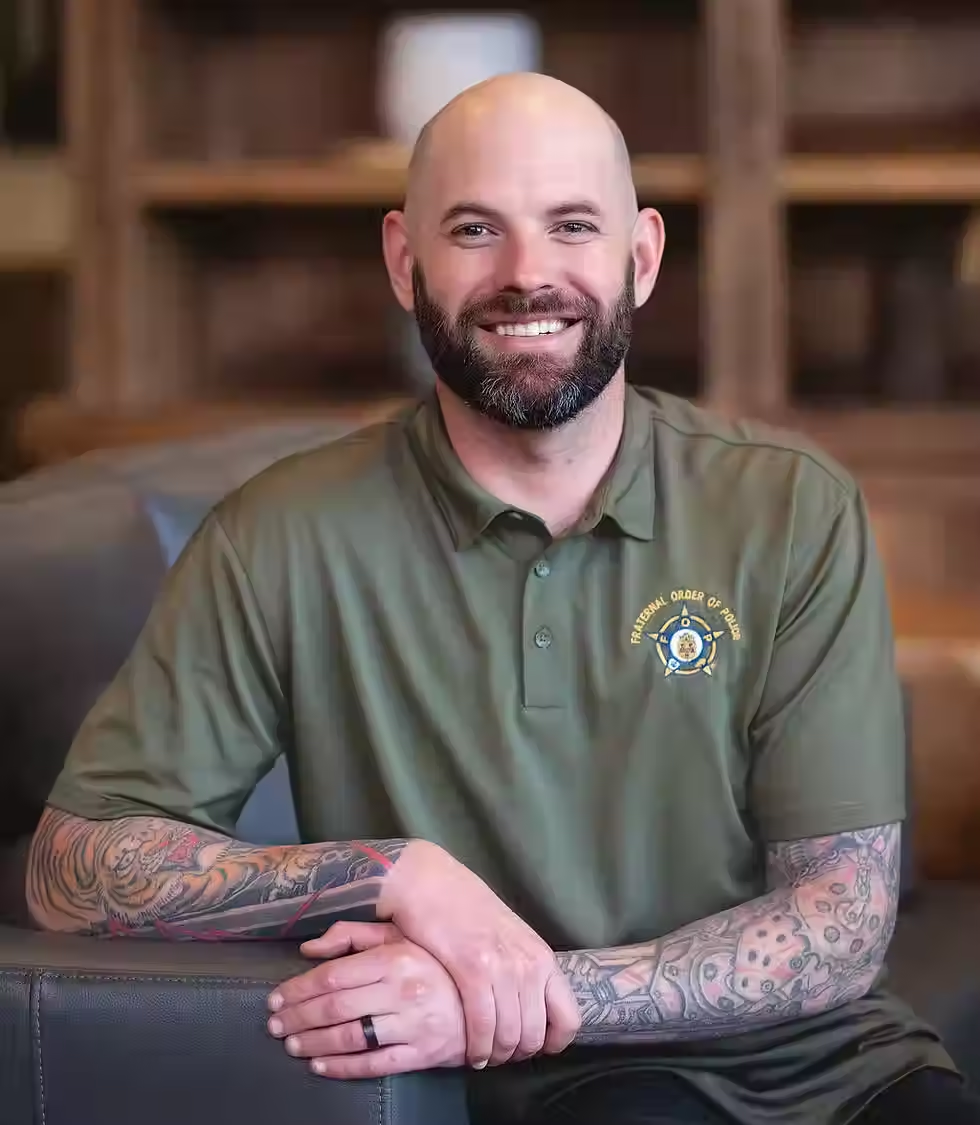
Austin Pederson, Executive Director of Chateau Health and Wellness
Brings over eight years of experience revolutionizing mental health and substance abuse treatment through compassionate care and innovative business strategies. Inspired by his own recovery journey, Austin has developed impactful programs tailored to individuals facing trauma and stress while fostering comprehensive support systems that prioritize holistic wellness. His empathetic leadership extends to educating and assisting families, ensuring lasting recovery for clients and their loved ones.