
Self-Medicating to Cope With Stress: Signs You Need to Know
Updated: Sep 4
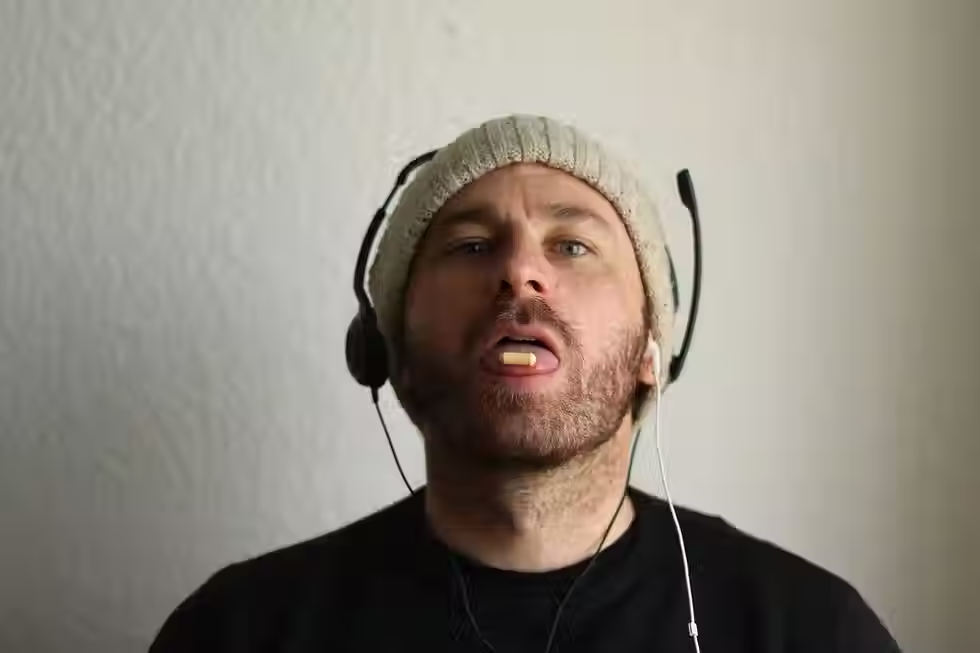
Reaching for a drink, a pill, or a joint after a brutal week is common, and it rarely feels like a problem in the moment. If stress has left you running on empty and substances have become your go-to way to unwind, you are not alone, and you are not past the point of turning things around.
Self-medicating to cope with stress means using alcohol, drugs, or other substances to numb stress instead of addressing what is causing it. It works for a few hours, then the stress returns, often stronger, which is what makes the pattern so easy to repeat and so hard to see from the inside.
Below, you will learn what self-medicating actually looks like, the signs that stress relief has turned into a substance use disorder, how self-medicating differs from addiction, and five coping strategies that hold up over time. You will also find guidance on when it's time to bring in professional support.
Table of Contents
What Does It Mean to Self-Medicate With Stress?
Why Substances Feel Like Relief (Short-Term)
Signs You're Self-Medicating With Alcohol or Drugs
Self-Medicating vs. Addiction: What's the Difference?
5 Healthier Ways to Cope With Stress
How Chateau Approaches Stress and Self-Medication
When to Seek Professional Help
Frequently Asked Questions
What Is Self-Medicating to Cope With Stress?
Self-medicating is using a substance, rather than a doctor-directed treatment, to manage an uncomfortable feeling. With stress specifically, it usually starts small: a drink after work, a pill borrowed from a friend to get through a hard week, a joint to quiet a racing mind before bed.
Stress itself is a normal reaction to a demanding job, a strained relationship, or a stretch of bad news. The problem is not feeling stressed. The problem is when substances become the only tool you reach for. According to the Substance Abuse and Mental Health Services Administration (SAMHSA), people with a mental health condition sometimes misuse alcohol or drugs as a form of self-medication, and more than one in four adults with a serious mental health problem also has a substance use problem.
Self-medicating rarely announces itself. It builds gradually, and by the time it is obvious to family or coworkers, the pattern is often well established.
Why Substances Feel Like Relief (Short-Term)
Alcohol and many drugs work fast on the nervous system. They slow racing thoughts, ease muscle tension, and create a temporary sense of calm, which is exactly why they feel like a solution.
Research from the National Institute on Alcohol Abuse and Alcoholism (NIAAA) shows that drinking to cope with stress can bring short-term relief from emotional discomfort, but over time it tends to make negative emotional states worse between drinks.
That shift is what pulls people into repeated use. The stress that alcohol seemed to fix comes back, usually harder to sit with than before, and the substance starts to feel less like a choice and more like a requirement. This is the trap. A solution that only works for a few hours cannot fix a problem that took months or years to build.
Signs You're Self-Medicating With Alcohol or Drugs
It's easy to justify use when it's tied to something as ordinary as stress. Clinicians look for specific behavior patterns to tell the difference between occasional stress relief and a developing substance use disorder. You or a loved one may be dealing with one if you notice:
Using a substance in larger amounts or for longer than you meant to
Failed attempts to cut back or stop
A large amount of time spent getting, using, or recovering from a substance
Strong cravings when you are not using
Substance use interfering with work, school, or family responsibilities
Continued use despite it hurting your health, mood, or relationships
Using in situations that are risky, such as before driving
Giving up hobbies or social activities you used to enjoy
Needing more of the substance to get the same effect (tolerance)
Withdrawal symptoms when you stop or cut back
The NIAAA's comparison of substance use disorder criteria explains how clinicians score severity: two to three symptoms point to a mild disorder, four or five to a moderate one, and six or more to a severe disorder. Moderate and severe cases usually call for medically supervised detox.
Quitting alcohol cold turkey after heavy, regular use can be dangerous and, in some cases, life-threatening. Post-acute withdrawal syndrome (PAWS), a stretch of lingering mood and sleep symptoms after the initial withdrawal passes, is also a common reason unsupervised attempts to stop don't stick.
Self-Medicating vs. Addiction: What's the Difference?
Not everyone who self-medicates has an addiction, and that distinction matters because it changes what kind of help is useful. Self-medicating describes the reason someone uses a substance: to manage a feeling like stress, anxiety, or grief. Addiction, which clinicians formally call a severe substance use disorder, describes a pattern of compulsive use that continues despite serious consequences and that the person struggles to control.
You can self-medicate occasionally without meeting criteria for addiction. The risk is that self-medication is one of the more common paths into addiction, and chronic, unmanaged stress fuels that cycle since the substance keeps solving the same problem in the short term while making the underlying stress harder to manage on your own. Getting support early, before the pattern hardens, is almost always easier than waiting until it doesn't.
5 Healthier Ways to Cope With Stress
Substances are not the only fast-acting option. These five strategies are simple enough to start today and do not carry the same long-term cost.
1. Body Check-Ins
A short body scan, noticing tension in your jaw, shoulders, or neck, can catch stress before it builds. Once you notice where you're holding it, a few slow breaths often releases it.
2. Mindfulness Exercises
Meditation, yoga, and tai chi are well-studied ways to lower stress. Even five minutes of morning tai chi or an evening yoga session can shift how the rest of your day feels.
3. Self-Care Routines
Stress often pushes self-care to the bottom of the list, which makes it worse. A short walk, a proper meal, or a slow bath before bed can restore some of what a hard day takes out of you.
4. Lean on Your Support System
Talking to a friend, family member, or sponsor gives stress somewhere to go besides a substance. You do not need to have it figured out before you reach out. Venting is often enough.
5. Talk to a Therapist
A therapist offers what friends usually cannot: trained, objective feedback. Weekly or biweekly sessions give you a place to unpack what's stressful and build coping strategies matched to your specific situation, along with help spotting the sources of stress you may not see on your own.
How Chateau Approaches Stress and Self-Medication
At Chateau Health & Wellness, self-medicating with stress is treated as a symptom, not the core issue. Many clients arrive using substances to manage stress, anxiety, or trauma they have never had the space to process. Because self-medication is frequently tied to an underlying mental health condition, our 56-bed residential program in Utah's Wasatch Mountains screens for co-occurring disorders on admission, not as an afterthought.
Every client works with a care team at a 1:4 clinician-to-client ratio, with 30, 60, and 90-day options depending on what the underlying stress and substance use pattern requires. For clients whose bodies have become physically dependent on alcohol or another substance, on-site medically supervised detox removes the need to transfer between facilities before residential care begins. Clients working specifically on drinking as a stress response often start in the Alcohol Program, while those managing a broader pattern of substance use alongside stress work through individual and group therapy built around the Chateau Wellness Method.
When to Seek Professional Help
If stress has become something you can't get through without a drink or another substance, that's the signal to stop managing it alone. Self-help strategies work well for everyday pressure, but once cravings, tolerance, or withdrawal symptoms show up, outpatient support or professional treatment is usually what actually breaks the cycle.
At Chateau Health & Wellness, we provide medically supervised detox and residential addiction treatment in a private, boutique setting in Utah's Wasatch Mountains.
Frequently Asked Questions
What does it mean to self-medicate with stress?
Self-medicating with stress means using alcohol, drugs, or another substance to numb or escape stress instead of addressing its cause. It offers short-term relief, but it doesn't resolve the underlying pressure, which typically returns and can push someone toward a repeating, worsening cycle of substance use.
What are the signs I'm self-medicating with alcohol or drugs?
Common signs include using more than intended, failed attempts to cut back, cravings, tolerance, withdrawal symptoms, and substance use interfering with work, relationships, or health. Having two or three of these signs points to a mild substance use disorder; six or more signals a severe one.
Is self-medicating the same as having an addiction?
No. Self-medicating describes why someone uses a substance, usually to manage a feeling like stress. Addiction describes a compulsive pattern of use that continues despite real consequences. Self-medicating can lead to addiction over time, but not everyone who self-medicates meets the clinical criteria for it.
Why is it dangerous to quit alcohol "cold turkey" after using it to cope with stress?
Stopping heavy alcohol use abruptly without medical support can trigger severe, sometimes life-threatening withdrawal symptoms. Post-acute withdrawal syndrome can also cause lingering mood and sleep disruptions for weeks afterward, which is why medically supervised detox is recommended for moderate to severe substance use disorders.
What are healthier ways to cope with stress instead of using substances?
Healthier alternatives include short body check-ins to catch physical tension, mindfulness practices like meditation or yoga, consistent self-care routines, leaning on friends or a support system, and talking with a therapist who can help you build coping strategies suited to your specific stressors.
Self-medicating with stress rarely feels like a decision. It builds one drink or one pill at a time, until the substance feels less like relief and more like a requirement. Chateau Health & Wellness works with clients to treat the stress and any underlying condition driving it, not just the substance use on the surface. Reach out to our admissions team to talk through what treatment could look like for you or someone you love.
 |  |  |

About The Author

Ben Pearson, LCSW - Clinical Director
With 19 years of experience, Ben Pearson specializes in adolescent and family therapy, de-escalation, and high-risk interventions. As a former Clinical Director of an intensive outpatient program, he played a key role in clinical interventions and group therapy. With 15+ years in wilderness treatment and over a decade as a clinician, Ben has helped countless individuals and families navigate mental health and recovery challenges.


