
How to File a Workers' Compensation Claim for PTSD as a First Responder
Updated: Sep 4
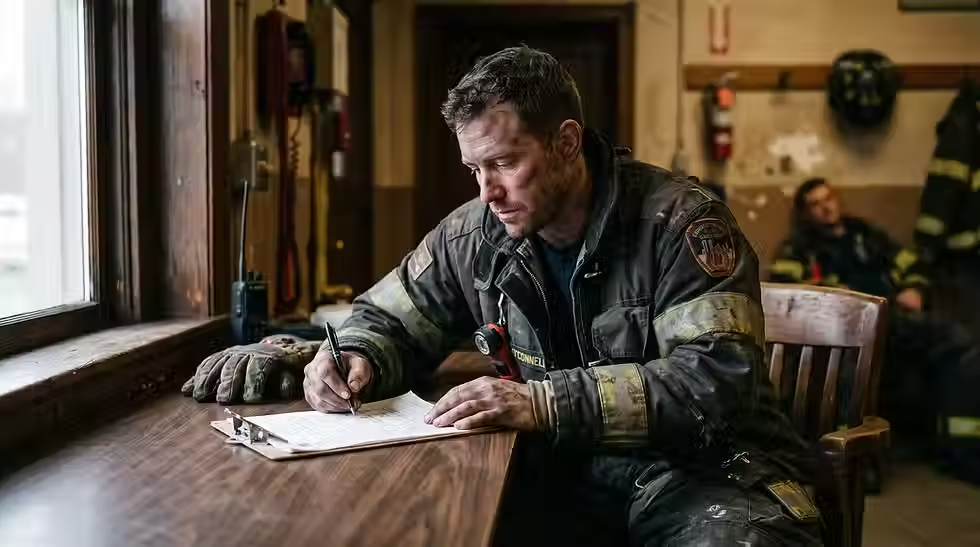
You've spent years responding to other people's worst days. Filing a workers' compensation claim for your own PTSD can feel like a different kind of battle, one with forms, deadlines, and a system that wasn't built with your job in mind.
First responders can file a workers' compensation claim for PTSD by reporting the triggering incident, getting a formal diagnosis, and submitting medical documentation within their state's filing deadline, often before pursuing residential treatment.
Below is the exact process, the state-by-state rules you need to know before you file, and what happens if your claim gets denied. Here's what to expect at each stage, from reporting the incident to accessing treatment on the other side. For the broader picture of support options beyond this claim process, see Chateau's full guide to first responder mental health resources.
In this guide:
What Workers' Compensation Covers for First Responder Mental Health
Who Qualifies for Workers' Compensation as a First Responder
How to File a Workers' Compensation Claim for PTSD: 7 Steps
PTSD Presumption Laws and Cumulative Trauma Claims
How Chateau Approaches Treatment After a Workers' Comp Claim
When to Seek Professional Help
Frequently Asked Questions
What Workers' Compensation Covers for First Responder Mental Health
Workers' compensation was built for broken bones and burns, not flashbacks and insomnia. That's changing. A growing number of states now recognize psychological injury as compensable when it's tied directly to the job, not personal life.
For first responders, that shift matters. The job puts you in front of shootings, fatal crashes, child deaths, and cumulative exposure that builds for years before it surfaces as PTSD, depression, or anxiety. Research from the CDC's National Institute for Occupational Safety and Health links this kind of chronic job stress directly to poor health outcomes and injury risk, and that toll lands hardest in high-trauma professions like yours. SAMHSA estimates roughly 30 percent of first responders develop a behavioral health condition over the course of a career, compared to 20 percent in the general population.
Coverage typically includes psychiatric evaluation, individual and group therapy, medication management, and in more severe cases, residential treatment. What it does not cover is anything the insurer can tie to a cause outside your job. That's why documentation matters more in a mental health claim than almost any other type of workers' comp case.
Who Qualifies for Workers' Compensation as a First Responder
Workers' compensation is state-mandated insurance for employees hurt or sickened because of their job. You need to be a classified employee, not an independent contractor, to qualify.
Physical injuries are usually straightforward. Mental health claims are not. Most states require proof that a specific incident, or a pattern of incidents, caused your condition and that it wasn't influenced by something happening outside of work. Conditions like PTSD, depression, anxiety, and acute stress reactions can qualify, but only when they clearly interfere with your ability to do your job.
A handful of states have gone further, passing "presumption" laws specifically for police officers, firefighters, paramedics, and dispatchers. Under these laws, a diagnosed condition is presumed to be work-related unless your employer proves otherwise. More on that below.
How to File a Workers' Compensation Claim for PTSD: 7 Steps
Step 1: Recognize the Need
Constant sadness, anxiety, disrupted sleep or appetite, emotional numbness, or flashbacks are not weakness. They're often early signs of PTSD in first responders, depression, or an anxiety disorder. Naming what you're experiencing, even privately at first, is the step that makes everything after it possible.
Step 2: Report the Incident
Report the event or pattern of events to your supervisor the same way you'd report a physical injury, in writing, with a date and a brief description. If your PTSD stems from years of cumulative exposure rather than a single incident, note that too. This documentation becomes the foundation of your claim.
Step 3: Review Your State's Workers' Comp Policy
Every state sets its own rules for what a policy covers, and many now include therapy sessions, psychiatric medication, and extended leave for mental health recovery. Check your department's specific policy or ask HR directly rather than assuming your coverage matches a coworker's from another department or state.
Step 4: Get a Formal Diagnosis Right Away
Even before your claim is filed, see a licensed mental health professional. Early intervention slows the progression of symptoms and gives you a documented, dated diagnosis. Tell the clinician you intend to file a workers' comp claim; that note in your chart directly links your job to your condition and strengthens everything that follows.
Step 5: File the Claim
Filing means completing your employer's or state board's claim form, attaching medical records and incident reports, and submitting everything inside your state's filing window, which can range from a few months to two years depending on where you work. Missing that window is one of the most common, and most avoidable, reasons a valid claim gets rejected before it's ever reviewed.
Step 6: Know Your Appeal Rights
A denial isn't the end of the process. Every state allows an appeal, and many first responders win on appeal once they add a specialist's evaluation or a union representative's support. Keep every document: incident reports, therapy notes, and correspondence with the claims adjuster.
Step 7: Use Your Approved Benefits
Once approved, benefits generally cover individual therapy, group therapy, psychiatric evaluation, medication, and residential or intensive outpatient treatment for more severe cases, including trauma-focused modalities like EMDR therapy for first responders. Confirm with your adjuster exactly which providers and treatment types your specific policy authorizes before you schedule care.
PTSD Presumption Laws and Cumulative Trauma Claims
Here's the part most guides skip: the process above looks different depending on whether your state has a PTSD presumption law. A 2024 analysis published in the Journal of Public Health Policy found that only nine states have passed laws presuming a first responder's mental health condition is work-related, shifting the burden of proof onto the employer instead of the claimant.
Without a presumption law, you have to affirmatively prove your job caused your PTSD, which is far harder for cumulative trauma than for a single catastrophic event. With one, a diagnosis alone can be enough to trigger coverage unless your department disputes it with its own evidence.
This distinction matters most for claims built on repeated exposure rather than one incident. Cumulative trauma claims, sometimes classified as an "occupational disease" rather than an injury, often run on a different statute of limitations than single-incident claims, frequently starting from the date of diagnosis instead of the date of the triggering event.
Ask your state's labor board or a workers' comp specialist which category your claim falls under before you file, since choosing the wrong one can delay your case by months.
How Chateau Approaches Treatment After a Workers' Comp Claim
An approved claim gets you access to care. It doesn't tell you which care actually works for a first responder's PTSD. That's where a lot of departments' preferred providers fall short: general outpatient therapy wasn't built around badge culture, shift work, or the specific weight of what you've witnessed on the job.
Chateau Health & Wellness runs a dedicated residential program for first responders, built around a 1:4 clinician-to-client ratio and staff who understand law enforcement, fire, EMS, dispatch, and corrections culture firsthand. Clients stay in a private, 56-bed setting in Utah's Wasatch Mountains for 30, 60, or 90 days, working through a trauma-first, dual-diagnosis treatment program that treats PTSD alongside any co-occurring substance use.
The admissions team also helps you understand how your workers' compensation benefits apply to residential care, so the financial side doesn't become one more reason to delay treatment you've already earned the right to access.
When to Seek Professional Help
If your symptoms have started affecting your ability to work safely, your relationships, or your sleep for more than a few weeks, that's the point to stop managing it alone. A filed claim and a diagnosis are useful, but they're not treatment. Chateau serves adults 26 and older, including professionals and first responders. Confidentiality is standard. Judgment is not.
At Chateau Health & Wellness, we provide dedicated residential treatment for first responders in a private, boutique setting in Utah's Wasatch Mountains.
Frequently Asked Questions
What mental health conditions typically qualify for a workers' compensation claim?
PTSD, depression, anxiety, and acute stress reactions can all qualify if a doctor links them directly to a work incident or a pattern of job-related trauma. Coverage varies by state, so check your department's policy and confirm eligibility with HR or your claims adjuster before assuming a condition is excluded.
Can PTSD from years of repeated calls qualify, or does it need one incident?
Yes. Many states recognize cumulative trauma as an "occupational disease," meaning years of repeated exposure to distressing calls can support a claim just as a single catastrophic incident can. The documentation requirements differ, so note ongoing symptoms and incidents as they happen rather than waiting until they add up.
What is the first step in filing a workers' compensation claim for PTSD?
Recognize what you're experiencing, then report it to your supervisor in writing, the same way you'd report a physical injury. That report, dated and specific, becomes the starting point for every document you'll need later, including your medical evaluation and the formal claim itself.
What documentation strengthens a first responder's PTSD claim?
Written incident reports, a licensed clinician's diagnosis, notes explicitly linking your condition to your job, and any communication with HR or your supervisor about the event. Consistent, dated records matter more in mental health claims than in physical injury claims, since insurers scrutinize causation closely.
What happens if a workers' compensation claim for PTSD is denied?
You have the right to appeal in every state. Many denied claims succeed on appeal once a specialist evaluation, additional medical records, or a union representative's support is added. Keep every document from the original filing, since you'll need it again for the appeal.
Chateau Health & Wellness provides dedicated residential treatment for first responders in a private, boutique setting in Utah's Wasatch Mountains. Call (801) 877-1272 or start the admissions process once your claim is filed and you're ready to talk through your treatment options.
 |  |  |

About The Author

Ben Pearson, LCSW - Clinical Director
With 19 years of experience, Ben Pearson specializes in adolescent and family therapy, de-escalation, and high-risk interventions. As a former Clinical Director of an intensive outpatient program, he played a key role in clinical interventions and group therapy. With 15+ years in wilderness treatment and over a decade as a clinician, Ben has helped countless individuals and families navigate mental health and recovery challenges.


