What Are the 3 P's of Recovery?
Updated: 6 days ago

Early sobriety runs on adrenaline. Somewhere around month three or four, that adrenaline runs out, and what's left is habit. This is exactly where the 3 P's of recovery, patience, persistence, and practice, start to matter more than anything you learned in your first week of treatment.
The 3 P's of recovery are patience, persistence, and practice. They protect the 4 pillars of recovery (health, home, purpose, and community), which give you the external stability sobriety depends on.
Below, we break down what each of the 3 P's looks like day to day. We also cover how they connect to the 4 pillars, and where a recovery center fits in once self-directed effort stops being enough.
Table of Contents
The 3 P's of Recovery: Patience, Persistence, Practice
What Are the 4 Pillars of Recovery?
How the P's and the Pillars Work Together
How Chateau Approaches the 3 P's of Recovery
When to Seek Professional Help
Frequently Asked Questions
The 3 P's of Recovery: Patience, Persistence, Practice
The 3 P's of recovery describe the mindset that protects long-term recovery once the initial motivation of treatment fades. They aren't abstract ideas. Each one shows up as a specific, repeatable behavior.
Patience
Practicing patience is hard, mostly because the brain is still catching up. Chronic substance use down-regulates dopamine receptor activity, and that recalibration takes time, often 6 to 18 months of continued sobriety. A flat or unmotivated stretch during this window is a normal part of the recovery process. It is not evidence that something is going wrong.
Think of the person who did everything "right" in their first 30 days and still feels numb in month four. That flatness is neurological, not a character problem. Patience means treating it that way instead of panicking.
Persistence
The initial motivation of early sobriety (sometimes called the "pink cloud" phase) fades for almost everyone. Persistence in recovery is what carries someone through that drop, and through any slip that happens along the way. It plays a crucial role precisely because motivation is unreliable and persistence does not depend on how someone feels on a given day.
A relapse prevention plan built before a setback happens makes persistence far easier to act on when it's actually needed. Staying committed after one bad week is what separates sustained recovery from a pattern of starting over.
Practice
Sobriety functions like a skill rather than a fixed state. Setting a boundary, reaching out before a craving escalates, and using a grounding technique under stress all get easier with repetition. Experiential and skills-based therapy gives people a structured place to practice these responses. The support groups many attend afterward give them a place to keep practicing.
Patience keeps you from giving up too early. Persistence keeps you going after a setback. Practice turns coping skills into habits you don't have to think about. Together, the 3 P's of recovery are what support long-term recovery once the 4 pillars below are in place.
What Are the 4 Pillars of Recovery?
SAMHSA's Office of Recovery names health, home, purpose, and community as the four major dimensions that support a stable life in recovery. The National Institute on Drug Abuse frames this similarly, pointing to recovery support services, mutual aid groups, and recovery-oriented treatment programs as what keeps early progress from unraveling. Each pillar covers a different part of daily functioning, and a gap in any single one puts the others at risk.
Health
Health means managing the physical and mental side of substance use disorder. That includes treating post-acute withdrawal symptoms, rebuilding sleep and nutrition habits, and addressing any co-occurring mental health condition at the same time as the addiction. Treating only the addiction while ignoring a condition like depression or PTSD tends to produce results that don't last.
Home
A stable, substance-free living environment gives the nervous system room to settle. Without it, even someone highly motivated to build a substance-free life is working against a constant stream of triggers. "Home" doesn't have to mean a permanent residence right away. For many people early in recovery, it starts as sober living or a residential treatment program.
Purpose
Purpose is the reason to keep showing up: a job, a return to school, caregiving, or volunteer work. It fills the space addiction used to occupy, and it gives the day a structure that doesn't depend on substance use.
Community
Recovery rarely holds up in isolation. Support groups, sponsors, family, and clinical staff at a recovery center all serve as accountability and connection at different points in the process.
These four pillars work as a system. A person with strong purpose and community but an unstable home is still at meaningfully higher relapse risk than someone with all four in place. That gap is exactly why the 3 P's above matter just as much as the pillars themselves.
How the P's and the Pillars Work Together
Here's a simple way to see it: a person can have a stable home, a full-time job, and a supportive family, and still relapse within a year if they never practice patience with the slow parts of healing or persistence through a hard week. The pillars are the structure. The P's are what keep someone standing inside it.
Pillar | P to Apply | Daily Action |
Health | Practice | 30 minutes of physical movement most days |
Home | Patience | Work toward a stable living situation one step at a time |
Purpose | Persistence | Show up to work, class, or volunteer commitments on low-motivation days |
Community | Practice | Share honestly in one support group or with one trusted person weekly |
A short weekly check-in works well here. Rate each pillar from 1 to 10 every Sunday. Whichever pillar scores lowest is the one to apply patience, persistence, or practice to that week. This single habit does more for long-term success than any single insight from a therapy session.
How Chateau Approaches the 3 P's of Recovery
Chateau Health & Wellness is a 56-bed residential recovery center in Utah's Wasatch Mountains, built around a trauma-first dual diagnosis model. A staffing model with one staff member for every four clients in small, dedicated groups means clients get real clinical support while they build the 3 P's, not a generic worksheet handed out on day one.
Patience is supported through integrated dual diagnosis care, so a co-occurring condition never gets treated as separate from the addiction while the brain recalibrates. Persistence and practice are built through structured treatment programs across the 30, 60, or 90-day stay, plus aftercare planning that starts well before discharge. Clients leave with a specific plan for staying persistent, connected to real support groups, not a general intention to "stay in touch."
When to Seek Professional Help
Practicing the 3 P's alone can be enough for someone whose foundation is already fairly stable. It's usually not enough when a home environment is actively unsafe, when cravings override daily functioning, or when a pillar has been missing for months rather than weeks. At that point, a residential recovery center gives someone the structure to rebuild patience, persistence, and practice under clinical supervision, before returning home.
At Chateau Health & Wellness, we provide residential addiction treatment for adults 26 and older in a private, boutique setting in Utah's Wasatch Mountains.
Frequently Asked Questions
What are the 3 P's of recovery?
The 3 P's of recovery are patience, persistence, and practice. They describe the mindset needed to protect the 4 pillars over time. Patience allows the brain to heal, persistence keeps you going after setbacks, and practice turns new coping skills into habits.
What are the 4 pillars of recovery?
The 4 pillars of recovery are health, home, purpose, and community. SAMHSA defines these as the core areas that support a stable, self-directed life after addiction. Each pillar addresses a different part of daily life, from physical wellness to social connection.
How long does it take for the brain to heal in recovery?
Dopamine receptor activity affected by chronic substance use typically takes about 6 to 18 months of continued sobriety to recalibrate. This timeline varies by person, substance, and length of use. A period of low motivation or flatness during this window is common and not a sign of failure.
Can you recover without all 4 pillars in place?
A gap in any one pillar raises the risk of relapse, since the pillars work together to support sobriety. Someone with strong purpose but an unstable home, for example, still faces significant relapse risk. Most treatment programs work to strengthen every pillar at once, not just one.
What happens if I relapse while working on the 3 P's?
A slip does not erase progress made on the pillars or the P's. Persistence means returning to the plan right away instead of treating one setback as total failure. A licensed treatment team can help identify what triggered the relapse and adjust the plan going forward.
How can family members support long-term recovery?
Family members support long-term recovery best by encouraging steady attendance at support groups and treatment programs, and by celebrating small wins along the way. Long-term success depends on staying committed together over months, not on any single conversation or intervention.
Chateau Health & Wellness helps adults 26 and older build the 3 P's of recovery. Residential care, a 1:4 clinician ratio, and a structured 30, 60, or 90-day program provide the structure. Call (801) 877-1272 to talk through which P or pillar needs the most support right now, or start the admissions process online.
 |  |  |

About The Author
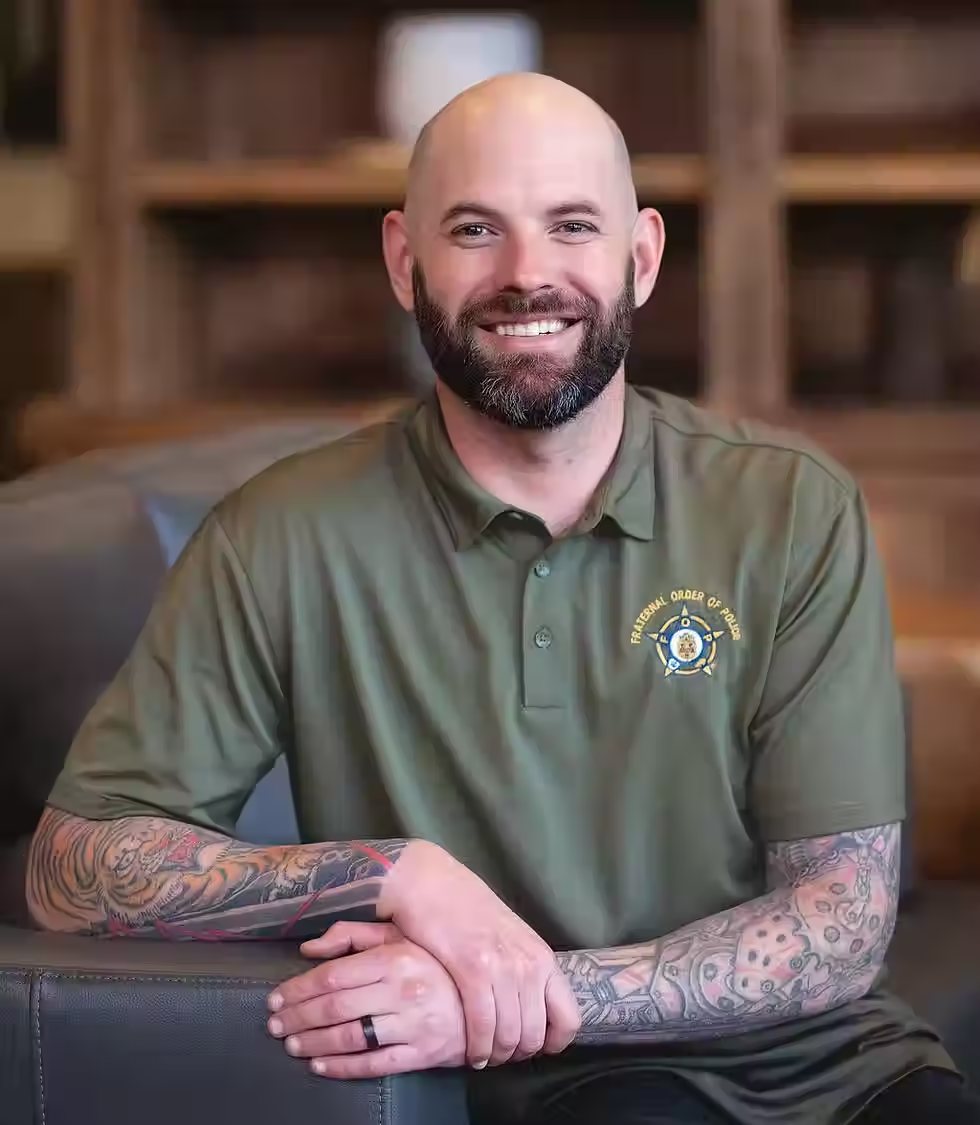
Austin Pederson, Executive Director of Chateau Health and Wellness
Brings over eight years of experience revolutionizing mental health and substance abuse treatment through compassionate care and innovative business strategies. Inspired by his own recovery journey, Austin has developed impactful programs tailored to individuals facing trauma and stress while fostering comprehensive support systems that prioritize holistic wellness. His empathetic leadership extends to educating and assisting families, ensuring lasting recovery for clients and their loved ones.