10 Al Anon Principles to Reclaim Your Sanity and Peace
Updated: Apr 6

Living with someone who drinks too much feels like walking on eggshells, constant worry, broken promises, and never enough sleep. The al anon principles can help you stop trying to control the drinker and start taking care of yourself. Read on to learn the core al anon principles, how to use them today, and exactly where to find Al‑Anon meetings near me, al‑anon online meetings, or local Al‑Anon groups so you can start feeling better this week.
What are the core Al-Anon principles for families of addicts?
Quick Answer: The al anon principles center on the "Three Cs": you didn’t cause the addiction, you can’t control it, and you can’t cure it. Working the Twelve Steps and learning to detach with love helps you move from constant crisis to some calm, regardless of whether your loved one stops drinking. If you want to act now, search “al anon meetings near me” or join an “al‑anon online meeting.”
The program utilizes spiritual and practical tools to dismantle the "eggshell" environment created by substance use. These steps provide a structured framework for setting healthy boundaries and ending the cycle of enabling. By prioritizing your own recovery, you gain the strength to live a fulfilled life even amidst the storm of another person's struggle.
Table of Contents
The Foundation of al anon principles
The Three Cs: A Reality Check
The Power of Detachment with Love
Why Al‑Anon Family Groups Matter
Practical Slogans for Daily Sanity
The Role of Anonymity
Honest Challenges in Recovery
FAQs
Next Steps: Find Meetings & Get Help Now
Quick Summary: The al anon principles are not about making the alcoholic sober. They are for the friends, family, and coworkers who are hurt by someone’s drinking. The point is your recovery — setting boundaries, building self‑care, and finding people who understand — in in‑person Al‑Anon meetings, virtual Al‑Anon meetings, or by calling an al‑anon phone number.
The Foundation of Al Anon Principles
Families don’t just suffer from the drinker’s behavior, they become consumed by it. You might catch yourself checking bottles, covering excuses at work, or cleaning up messes so life can appear “normal.” The al anon principles help you stop doing that. They move your energy from fixing someone else to repairing yourself. If you’re ready to start, look up “al‑anon near me” or “al anon meetings online” and pick one meeting to attend this week.
In our experience working with families in Greater Seattle Al Anon and across the country, we see that the first step toward health is admitting powerlessness. This does not mean you are weak. It means acknowledging that your efforts to control the drinker have failed. By leaning into the spiritual principles of the program, you begin to redirect that wasted energy back toward your own physical and mental well-being.
The Three Cs: A Reality Check
One of the most vital al anon principles for newcomers is the concept of the "Three Cs." This simple framework helps strip away the guilt that many family members carry.
You didn't Cause it: You are not responsible for the person's choice to drink or their underlying addiction.
You can't Control it: No amount of pleading, hiding car keys, or pouring out bottles will stop an addict who is determined to use.
You can't Cure it: recovery is a personal journey that the drinker must choose for themselves.
When you accept these truths, you stop trying to be the drinker’s manager and start being yourself again. A practical next step is an “Al‑Anon beginners meeting” or an “al‑anon online meeting” to hear how others learned the same lesson.
The Power of Detachment with Love
Detachment is perhaps the most misunderstood of all al anon principles. People often think it means being cold, distant, or indifferent. In reality, detachment with love is a protective barrier for your soul. It allows you to love the person while refusing to participate in their chaos.
A major part of this process involves setting boundaries that prioritize your safety and sanity over the drinker's demands.
What Detachment Looks Like
Not "rescuing" the drinker from natural consequences (like a hangover or a missed shift at work).
Refusing to argue with someone who is currently intoxicated.
Allowing the other person to face the results of their own actions.
Focusing on your own plans for the evening regardless of the drinker's state.
We have observed that when family members stop buffering the addict from the consequences of their drinking, the addict is often forced to face the reality of their situation sooner. This is often the "rock bottom" required for them to seek help.
Why Al Anon Family Groups Matter
Living with an alcoholic is isolating. Al‑Anon meetings remind you that you’re not the only one living this way. The group is practical, not preachy — people share what worked at holiday dinners, how they handled holidays, or scripts they used when money or safety was on the line. Whether you search “Al‑Anon meetings near me,” “al‑anon online meetings,” or “al‑anon phone meetings,” you can find support that fits your schedule.
Benefits of the Group Setting
Shared experience: Others get your story without judgment.
Practical tools: Real scripts and real examples.
Confidential venting: Anonymity keeps your story safe.
Easy access: Look for “online al anon meetings” or local listings like “Greater Seattle Al Anon.”
Whether you find a meeting through a local chapter like greater seattle al anon or an online forum, the connection to a community is a primary driver of long-term recovery for the family.
Principle | Goal | Action |
Acceptance | Stop fighting reality | Acknowledge the addiction exists |
Boundaries | Protect your peace | Say "no" to unacceptable behavior |
Self-Care | Restore health | Focus on sleep, diet, and hobbies |
Anonymity | Ensure safety | Keep others' stories confidential |
Practical Slogans for Daily Sanity
The al anon principles are often distilled into short, punchy slogans. These act as mental anchors when things get heated or stressful.
"One Day at a Time": This prevents you from spiraling into "what if" scenarios about the future. You only have to get through the next 24 hours.
"First Things First": When life feels overwhelming, this reminds you to focus on the most immediate, necessary task.
"Live and Let Live": This is a call to release the judgment you hold toward the drinker and focus on your own conduct.
"Keep It Simple": Addiction creates complexity. This principle encourages you to look for the most straightforward solution to a problem.
The Role of Anonymity
Anonymity is described as the spiritual foundation of all al anon principles. It serves two purposes. First, it protects the privacy of al anon members and their families. This is crucial for people who may have high-profile jobs or who are simply private by nature.
Second, it promotes equality. In a meeting, it does not matter if you are a CEO or unemployed. Everyone is there for the same reason: to find relief from the effects of someone else’s drinking.
Honest Challenges in Recovery
It is important to be honest: practicing these principles is incredibly difficult. You may feel like you are "giving up" on your loved one at first. The transition from being a caretaker to an independent individual is painful.
There are also limitations. Al Anon is not a therapy group. If you are in a situation involving physical abuse, the principle of "waiting" may not be enough. In those cases, immediate physical safety must come first. Dealing with addiction in the home requires a multi-faceted approach, often involving professional intervention.
Pro Tip: If the idea of the 12 steps feels too big, just attend one meeting. Listen. You don't even have to speak. Most al anon members suggest attending six meetings before deciding if the program is right for you.
Applying Principles to Life
The beauty of these tools is that they work everywhere. Learning to set a boundary with a demanding boss or a difficult child uses the same "muscles" you develop in recovery. By focusing on your own character and reactions, you become a more grounded, resilient person in every area of your life.
If you are ready to stop living in the shadow of someone else’s addiction, it is time to look into local resources. You deserve a life of peace, regardless of whether your loved one chooses to get sober.
Ready to reclaim your life? Find an Al Anon meeting near you and start your journey today.
Frequently Asks Questions:
Is Al Anon a religious program?
No. While it uses spiritual language like "Higher Power," it is not affiliated with any specific religion. Members are encouraged to define their own spiritual path, which can include nature, the group itself, or secular ethics.
What is the difference between AA and Al Anon?
AA (Alcoholics Anonymous) is for the person who has the drinking problem. Al Anon is for the friends, family, and coworkers who are affected by that person’s drinking.
Can I attend Al Anon if the person is no longer drinking?
Yes. The effects of addiction can linger long after the drinking stops. Many people find the al anon principles helpful for navigating the "dry drunk" phase or the general stresses of long-term recovery.
How much does it cost to join?
There are no dues or fees for membership. Most groups pass a basket for voluntary contributions to cover the cost of the meeting room and literature.
Is Al Anon only for spouses of alcoholics?
No. Al anon family groups are open to anyone whose life has been affected by someone else’s drinking. This includes parents, children, siblings, partners, coworkers, and friends. The al anon principles apply to any relationship where addiction has created a cycle of chaos or codependency.
At Chateau Health and Wellness, we recognize that the weight of a loved one’s addiction is a burden no one should carry alone. Our team is here to walk beside you as we apply these transformative principles to your unique family dynamic. We are committed to providing a sanctuary where healing is a shared responsibility, and our experts are ready to help you navigate the transition from crisis to composure. If you are ready to reclaim your peace of mind and rediscover your own path to health, please reach out to us today. You can speak with our supportive staff by calling (801) 877-1272. Let us begin this journey of recovery together, ensuring that you have the professional guidance and compassionate community you deserve.
 |  |  |

About The Author
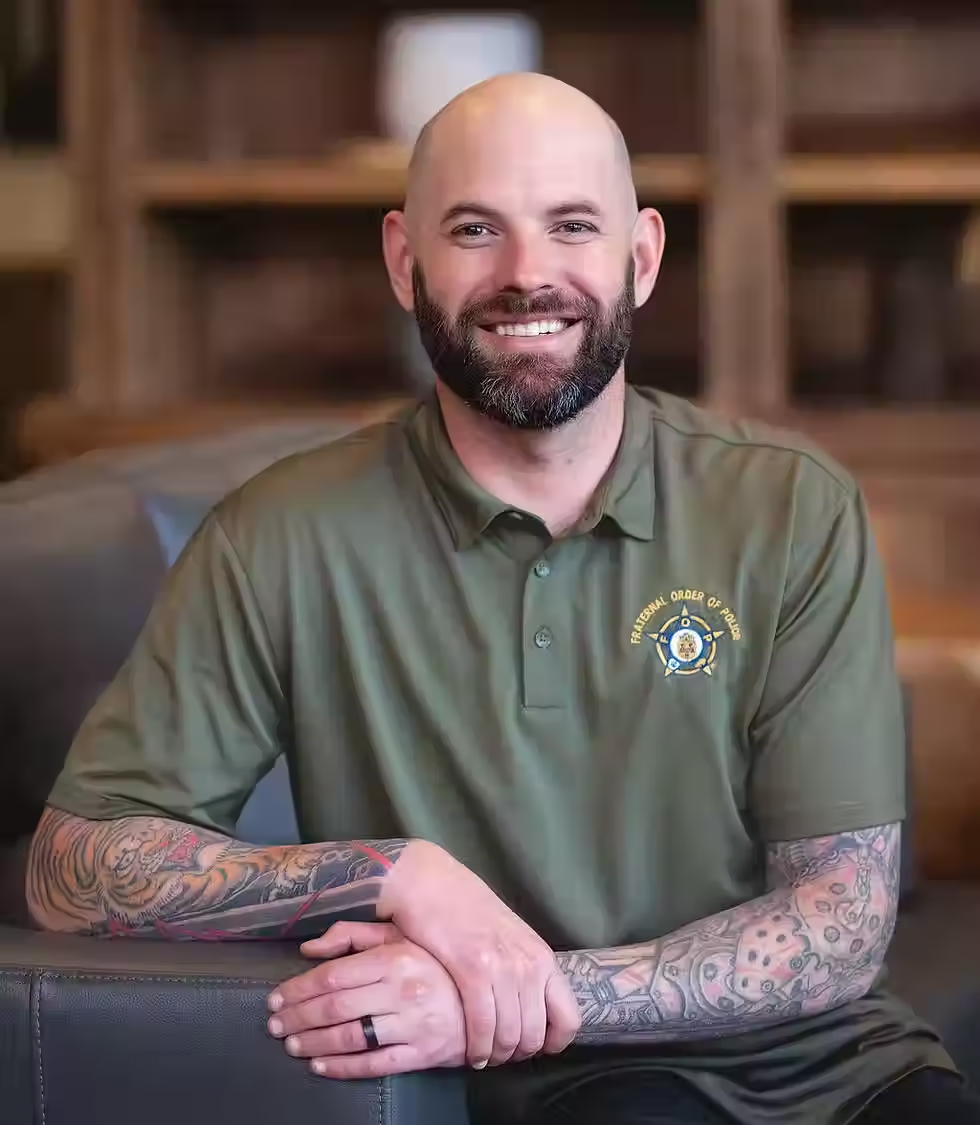
Austin Pederson, Executive Director of Chateau Health and Wellness
Brings over eight years of experience revolutionizing mental health and substance abuse treatment through compassionate care and innovative business strategies. Inspired by his own recovery journey, Austin has developed impactful programs tailored to individuals facing trauma and stress while fostering comprehensive support systems that prioritize holistic wellness. His empathetic leadership extends to educating and assisting families, ensuring lasting recovery for clients and their loved ones.