
EMDR Therapy for First Responders: What It Is and How It Works
Updated: Sep 4

You have seen things most people will never see. You have responded to calls that stay with you long after the shift ends. And if trauma has started to shape your sleep, your relationships, or your ability to walk back through that front door at the end of the day, you are not broken. You are carrying something that needs real treatment. EMDR therapy for first responders is one of the most researched, most effective tools available for doing exactly that.
EMDR (Eye Movement Desensitization and Reprocessing) is an evidence-based therapy that helps the brain process traumatic memories so they lose their emotional grip. Research from the American Psychological Association shows it is highly effective for PTSD. For first responders who have experienced repeated trauma, EMDR can reduce symptoms significantly — often in fewer sessions than traditional talk therapy.
If you have heard of EMDR but are not sure what actually happens in a session, or whether it is right for what you are carrying, keep reading. This post breaks down how EMDR works, why it fits the way first responders experience trauma, and what treatment looks like at a residential level of care.
Table of Contents
What EMDR Therapy Actually Is
EMDR stands for Eye Movement Desensitization and Reprocessing. It was developed in the late 1980s by psychologist Dr. Francine Shapiro and has since become one of the most studied trauma treatments in the world. The American Psychological Association, the World Health Organization, and the U.S. Department of Veterans Affairs all recognize it as an effective treatment for PTSD.
The core idea is this: traumatic memories sometimes get "stuck" in the nervous system in a raw, unprocessed form. When something in the present triggers one of those memories, your brain responds as if the threat is happening right now. EMDR uses a specific set of techniques, including bilateral sensory input like guided eye movements, taps, or sounds, to help the brain finally process what it was unable to at the time. It is not about reliving the trauma. It is about changing the way the memory is stored.
Why First Responders Experience Trauma Differently
Most people think of trauma as a single event. For police officers, firefighters, paramedics, and 911 dispatchers, trauma is cumulative. You do not have one incident to process. You have hundreds. Sometimes thousands.
This is called cumulative occupational trauma, and it operates differently from a single-incident PTSD. The nervous system absorbs hit after hit, often without adequate time to recover between shifts. The culture of first responder work makes it worse. Showing vulnerability can feel like a career risk. Asking for help is still seen in many departments as a sign of weakness.
According to research published through the Substance Abuse and Mental Health Services Administration, first responders experience PTSD at rates significantly higher than the general population, with some studies placing estimates between 15 and 30 percent. Many more go undiagnosed.
The result is a person who is highly functional on the job and quietly falling apart everywhere else.
How Cumulative Trauma Shows Up
Cumulative trauma rarely looks like a Hollywood breakdown. More often it looks like:
Hypervigilance that will not turn off at home
Sleep disruption, nightmares, or waking at 3 a.m. with your mind already running
Emotional numbness or detachment from people you love
Irritability that feels out of proportion to what triggered it
Avoiding certain neighborhoods, sounds, or situations that remind you of specific calls
Increased alcohol use to get through the night
If any of these sound familiar, what you are experiencing is not a character flaw. It is a physiological response to extraordinary stress. And it responds well to the right treatment.
How EMDR Targets Trauma in the Brain
To understand why EMDR works, it helps to understand what happens to the brain during trauma.
When you experience something threatening, your brain's stress response activates fast. The amygdala, your brain's alarm system, takes over. The prefrontal cortex, responsible for reason and context, goes offline. This is why, in a crisis, you act on instinct rather than analysis. It is the system working exactly as designed.
The problem is that traumatic memories can stay locked in that activated state. The brain never gets the signal that the threat has passed. So the memory sits there, raw and charged, waiting for something to trigger it.
EMDR works by activating that memory while simultaneously engaging bilateral stimulation, typically a therapist moving their fingers back and forth while you follow with your eyes. This bilateral input appears to mimic the brain activity that happens during REM sleep, the phase when the brain naturally consolidates and processes memories.
Research from the National Institute of Mental Health supports the idea that this process allows the brain to reprocess traumatic memories so they are stored differently. The event does not disappear. But it moves from an active threat signal to a past experience. The charge dissipates.
What Changes After Processing
After effective EMDR processing, most people describe the same thing: the memory is still there, but it no longer hijacks them. They can think about the incident without the body flooding with adrenaline. Triggers lose their grip. Sleep often improves. The distance between work and home starts to feel real again.
What EMDR Sessions Look Like
Walking into a first EMDR session with no idea what to expect can feel unsettling. Here is what the process actually looks like, broken into its phases.
Phase 1: History and Treatment Planning
Before any bilateral stimulation happens, your therapist gets to know your full picture. They will ask about significant life experiences, current symptoms, and the specific memories or triggers that are creating the most disruption. This phase typically takes one to three sessions and lays the groundwork for everything that follows.
Phase 2: Preparation and Stabilization
Your therapist teaches you grounding and stabilization techniques before touching any traumatic material. For first responders, this phase is important. You need reliable tools to manage your nervous system before you begin opening difficult memories. This is not skipping ahead. It is making sure the work that follows is safe.
Phases 3 through 8: Assessment, Desensitization, and Reprocessing
This is the core of EMDR work. You identify a specific memory, the negative belief it created about yourself, and where you feel it in your body. Then, while holding the memory in mind, you follow bilateral stimulation from your therapist. After each set, you briefly describe what came up. The process repeats in sets until the distress level attached to the memory drops significantly.
Most people find this process less destabilizing than they expected. The bilateral stimulation keeps the brain in a dual-attention state: connected to the past memory while remaining anchored in the present moment.
EMDR vs. Other Trauma Therapies for First Responders
EMDR is not the only evidence-based trauma treatment. It is worth understanding how it compares to the other approaches you might encounter.
Cognitive Processing Therapy (CPT) works by identifying and challenging the distorted beliefs trauma creates, such as "I should have done more" or "I can never trust anyone." It is highly effective and often used alongside EMDR in residential settings. Where EMDR goes directly at the memory and its emotional charge, CPT works more through structured thinking and written exercises.
Prolonged Exposure (PE) involves gradual, repeated exposure to trauma memories in a safe environment until they lose their intensity. It is evidence-based and effective, but many first responders find the process more confrontational than EMDR, particularly in early treatment.
Somatic therapies address trauma stored in the body through movement, breathwork, and body awareness. They work well in combination with EMDR at a residential level of care.
For many first responders, EMDR's relatively faster results and lower reliance on verbal processing make it a strong fit. You do not have to be able to articulate what you went through. The therapy works even when language falls short.
When Residential Treatment Makes EMDR More Effective
EMDR can be delivered in weekly outpatient sessions. For first responders dealing with cumulative trauma, occupational burnout, and often co-occurring substance use, outpatient work has real limits.
Going to a 50-minute session once a week, then returning to the same shift schedule, the same culture, the same triggers, makes it hard for processing to fully take hold. You spend the week re-activating what you just began to settle.
Residential treatment changes that equation. When you step away from the environment that is actively reinforcing your symptoms, your nervous system finally has room to regulate. EMDR delivered inside a residential program benefits from:
Daily support that reinforces what each session stirs up
Peer connection with others who understand the work you do
Adjunct therapies like somatic work, group therapy, and mindfulness that build on EMDR sessions
Medical support if detox from alcohol or other substances is part of the picture
A physical environment designed to calm the nervous system, not activate it
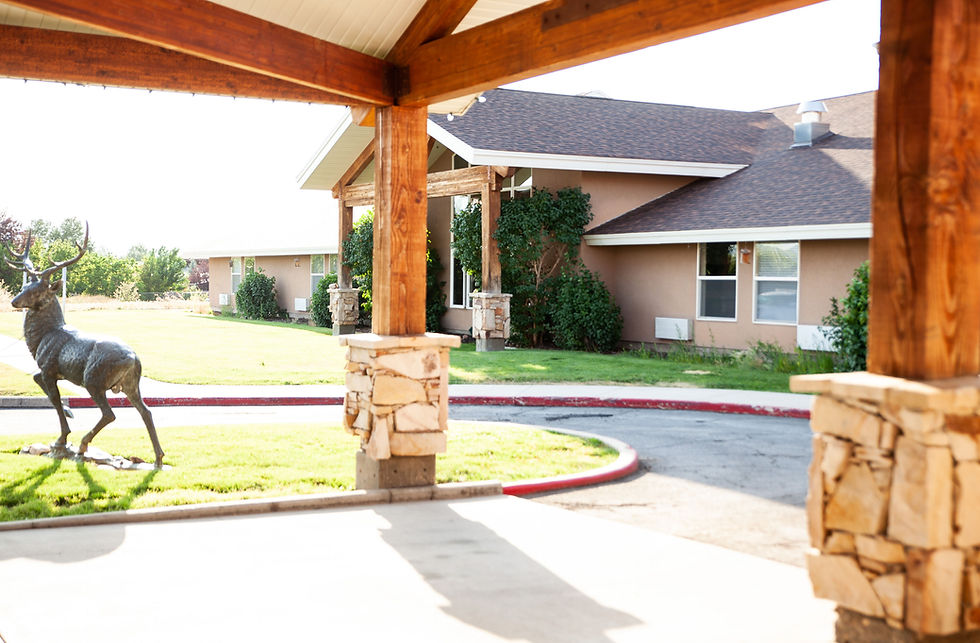
At Chateau, our Trauma and PTSD program uses EMDR as part of an integrated residential treatment model. The setting in Utah's Wasatch Mountains was chosen intentionally. Distance from the job, from the city, from the noise, matters more than most people realize before they arrive.
When to Seek Professional Help
If trauma symptoms have been present for more than a few weeks, are getting worse rather than better, or are affecting your ability to function at work or at home, that is a signal that self-management has limits. You deserve treatment that matches the weight of what you have experienced.
At Chateau Health and Wellness, we provide specialized trauma treatment for first responders and veterans in a private, boutique residential setting in Utah's Wasatch Mountains. Our First Responders program was built for people who protect others and have rarely had space to be the one who gets support.
Frequently Asked Questions
Does EMDR work for first responders with cumulative trauma, not just a single incident?
Yes. EMDR is highly effective for cumulative trauma. Your therapist will work through significant memories systematically, prioritizing the ones creating the most disruption in your daily life. Many first responders find that processing a handful of core incidents produces significant relief even when the total number of traumatic experiences is large.
How many EMDR sessions does it take to see results?
It varies. Some people notice significant change within 6 to 12 sessions. Others with more complex trauma histories benefit from longer treatment. In a residential setting, where EMDR can happen more frequently than once a week, many people experience notable shifts within a few weeks. Your therapist will reassess regularly throughout treatment.
Will I have to talk in detail about what happened?
Not in the way you might expect. EMDR does not require you to narrate the event out loud in detail. You hold the memory in mind while following the bilateral stimulation, and your therapist guides the process based on what you report between sets. Many people find this less exposing than traditional talk therapy.
Is EMDR covered by insurance for first responders?
Many insurance plans cover EMDR when it is delivered by a licensed therapist as part of a mental health treatment program. Coverage specifics vary by plan. Our admissions team at Chateau can help you verify your benefits before you commit to anything. Call (801) 877-1272 to start that conversation.
Can EMDR be done alongside treatment for alcohol use?
Yes, and it often needs to be. Many first responders use alcohol to manage trauma symptoms, and the two are deeply connected. At Chateau, our Dual Diagnosis program treats both simultaneously. Stabilization from substances happens first, followed by trauma work as your nervous system is ready.
At Chateau Health and Wellness, we work specifically with first responders, veterans, and adults who have carried more than most people will ever understand. Our 14-bed boutique facility in the Wasatch Mountains keeps treatment small, private, and focused. EMDR is part of how we treat trauma, alongside CPT, somatic therapies, and group work tailored to the people in our program. If you are trying to figure out whether what you are carrying has gotten heavy enough to need real support, that question alone is worth a conversation. Call us at (801) 877-1272 or visit our admissions page to learn more. We respond with care, not a sales pitch.
 |  |  |

About The Author

Zachary Wise is a Recovery Specialist at Chateau Health and Wellness
Where he helps individuals navigate the challenges of mental health and addiction recovery. With firsthand experience overcoming trauma, depression, anxiety, and PTSD, Zach combines over 8 years of professional expertise with personal insight to support lasting healing.
Since 2017, Zach has played a pivotal role at Chateau, working in case management, staff training, and program development.


