
Does Workers' Compensation Cover the Cost of Treatment for First Responders?
Updated: Sep 4

Getting hurt or traumatized on the job is stressful enough without wondering whether you can afford the care that follows. Workers' compensation exists to cover exactly this kind of situation, but the coverage details, the paperwork, and the coordination with your own health insurance can feel like a second job on top of your recovery.
Workers' compensation can cover the cost of treatment, including residential care, therapy sessions, and medical visits, when a work-related injury or condition is documented and approved through a case number. Coverage amount and type vary by state.
Below, we break down what workers' compensation actually pays for, what a case worker and case number do for you, whether you still need your own health insurance, and how Chateau Health & Wellness works directly with workers' compensation programs.
Table of Contents
What Does Workers' Compensation Cover for Treatment?
How a Case Worker and Case Number Get Your Treatment Approved
Do You Have to Use Your Own Health Insurance Too?
How Chateau Health & Wellness Works With Workers' Compensation
When to Seek Professional Help
Frequently Asked Questions
What Does Workers' Compensation Cover for Treatment?
Workers' compensation was built to cover physical injuries first, but most states have expanded it to include mental health conditions connected to the job, including PTSD in first responders. If a traumatic event or cumulative work stress caused a diagnosable condition, treatment for it can qualify the same way a physical injury would.
In most cases, coverage includes housing at a residential treatment center, individual and group therapy sessions, medical visits, and any medication management tied to your diagnosis. The amount and the specific services covered depend on your state's workers' compensation laws, so two people with similar claims in different states can end up with different benefits. The U.S. Department of Labor's Office of Workers' Compensation Programs outlines how federal programs structure these benefits, which gives a useful baseline even if your claim runs through a state system instead.
Coverage for this kind of care matters more than most people realize. CDC research on first responder suicide risk found that law enforcement officers and firefighters are more likely to die by suicide than in the line of duty, with occupational stress driving elevated rates of PTSD, depression, and suicidal ideation. Treatment coverage is not a bureaucratic detail. It is often the thing standing between a first responder and the care that keeps them alive.
Coverage exists, but it is not automatic. You still need documentation, a diagnosis, and an approved claim before a treatment center can bill workers' compensation directly for your care.
How a Case Worker and Case Number Get Your Treatment Approved
Before a treatment center can bill workers' compensation for your care, your claim needs two things: a case worker and a case number. The case worker is assigned by your employer's insurance carrier or state workers' compensation board, and the case number is what treatment providers reference when they submit bills for approval.
Without a case number, a residential program has no way to verify that your care is authorized, which can delay admission or leave you responsible for costs that should have been covered. Ask your case worker for this number as early as possible, even if your claim is still under review.
Once your case worker confirms coverage, they become your point of contact for questions about what is included. They can tell you whether your plan covers the full length of a residential stay, whether outpatient follow-up is included, and what documentation your treatment team needs to submit along the way. Our guide on filing a workers' compensation claim for mental health walks through the reporting and documentation steps that come before this stage, if you have not filed yet.
A case worker and case number turn a workers' compensation benefit into a usable treatment authorization. Securing both early protects you from billing surprises once care begins.
Do You Have to Use Your Own Health Insurance Too?
No. If your workers' compensation claim is approved and the treatment facility bills the claim directly, you are not required to run charges through your personal health insurance first. You should not owe a deductible or hit your out-of-pocket maximum for care that workers' compensation is already paying for.
This matters because the Mental Health Parity and Addiction Equity Act requires that mental health and substance use coverage be handled on par with medical coverage, but workers' compensation operates as a separate system from your regular health plan. The two rarely need to interact once your claim is active.
That said, coordination rules vary by state and by the terms of your specific policy. A workers' compensation attorney can clarify whether you might be entitled to additional benefits beyond what workers' comp provides, particularly for injuries with long-term effects. Understanding this distinction upfront helps you avoid paying for care you have already secured coverage for.
How Chateau Health & Wellness Works With Workers' Compensation
Chateau Health & Wellness is a residential treatment program built specifically for first responders and other professionals, with 56 beds in Utah's Wasatch Mountains and a 1:4 clinician-to-client ratio. We have worked with workers' compensation programs across multiple states and understand how each one structures claims, documentation, and billing.
Our admissions team verifies your workers' compensation benefits before you commit to anything, so you know exactly what is covered before you arrive. If your condition involves trauma or PTSD, our clinical team builds a treatment plan around trauma-focused modalities like EMDR and CBT rather than a generic program. We also coordinate directly with your case worker throughout your stay, so updates and documentation requests do not fall on you while you are focused on recovery.
If your claim centers on PTSD specifically, our guide on workers' compensation for first responders with PTSD covers the therapies most commonly approved for that diagnosis. For a broader look at the programs available through our first responder workers' comp resources, that page outlines the full range of support we offer beyond individual treatment.
When to Seek Professional Help
If a work-related injury or traumatic event has affected your mental health and outpatient counseling or informal support has not been enough, residential treatment gives you the structure and clinical support to actually process what happened. This is especially true when symptoms are affecting your sleep, relationships, or ability to work.
At Chateau Health & Wellness, we provide residential addiction treatment for adults 26 and older in a private, boutique setting in Utah's Wasatch Mountains.
Frequently Asked Questions
Does workers' compensation cover the full cost of residential treatment?
In most cases, yes, once your claim is approved. Coverage typically includes housing at the facility, therapy sessions, and medical visits connected to your diagnosis. The exact scope depends on your state's laws and your specific policy, so confirm details with your case worker before admission.
Do I have to use my own health insurance if workers' compensation is covering my treatment?
No. If your claim is approved and the facility bills workers' compensation directly, you should not be responsible for your regular health plan's deductibles or out-of-pocket maximums for that same care. Coordination rules vary by state, so verify this with your case worker.
What is a case number and why do I need one for treatment?
A case number is the reference your workers' compensation carrier assigns once your claim is active. Treatment providers use it to bill your care directly to the claim. Without one, a facility cannot verify your coverage, which can delay admission or leave charges unpaid.
Does Chateau Health & Wellness accept workers' compensation?
Yes. Chateau Health & Wellness has experience working with workers' compensation programs from multiple states, particularly for first responders and other professionals. Our admissions team verifies your specific coverage and benefits before you arrive, so there are no surprises once treatment begins.
What happens if my workers' compensation claim for treatment is denied?
You have the right to appeal. Most denials happen because documentation was incomplete or the link between the job and the condition was not clearly established. A workers' compensation attorney or your case worker can help identify what additional evidence your appeal needs to succeed.
At Chateau Health & Wellness, our admissions team works directly with your case worker to confirm coverage before you commit to treatment. If you are ready to talk through your options, start the admissions process or call (801) 877-1272 to speak with someone today.
 |  |  |

About The Author
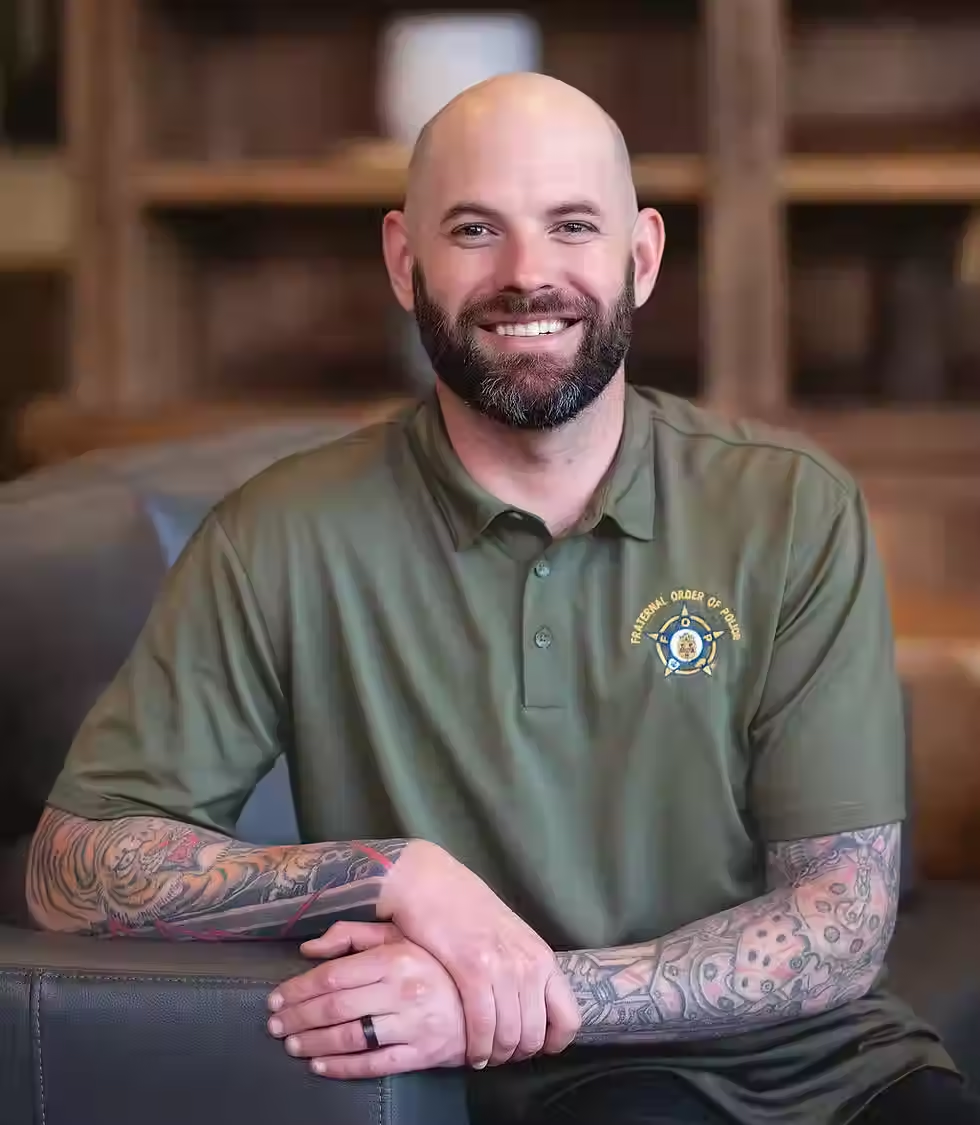
Austin Pederson, Executive Director of Chateau Health and Wellness
Brings over eight years of experience revolutionizing mental health and substance abuse treatment through compassionate care and innovative business strategies. Inspired by his own recovery journey, Austin has developed impactful programs tailored to individuals facing trauma and stress while fostering comprehensive support systems that prioritize holistic wellness. His empathetic leadership extends to educating and assisting families, ensuring lasting recovery for clients and their loved ones.


