What Is an Outward Mindset in Addiction Recovery?
Updated: Sep 4

Early recovery has a way of turning people inward. Shame makes you guard your image. Fear makes you protect yourself first and think about everyone else later. That instinct makes sense after everything addiction takes from a person, but it also keeps relationships thin right when they need to be strong.
An outward mindset in addiction recovery means shifting focus from self-protection and shame toward genuine concern for other people. Chateau Health & Wellness uses Arbinger's Outward Mindset framework to help clients rebuild trust and connection.
This article breaks down what an outward mindset actually looks like, why it matters for recovery outcomes, and how it plays out specifically for first responders carrying the weight of their job. You'll also see how Arbinger's Outward Mindset program fits into treatment at Chateau.
Table of Contents
Inward vs Outward Mindset: What Is the Difference?
Why Mindset Shapes Recovery Outcomes
Outward Mindset for First Responders in Recovery
How Chateau Applies the Arbinger Outward Mindset in Treatment
When to Seek Professional Help
Frequently Asked Questions
What Is an Outward Mindset in Addiction Recovery?
An inward mindset treats other people as obstacles, tools, or background noise. You see a coworker, a spouse, or a friend mainly in terms of what they mean for you: are they helping your goals, blocking them, or just irrelevant. This isn't usually a conscious choice. It's a default that gets stronger under stress, and addiction adds plenty of stress.
An outward mindset flips that. You start to see other people as people, with their own needs, pressure, and history, not just as characters in your own story. Arbinger's inward vs. outward mindset research frames this as the single biggest factor separating teams and relationships that actually work from ones that quietly fall apart.
Put simply, it's the difference between a self-focused stance and an others-focused one. In a treatment setting, this distinction is not abstract. It shows up in whether someone actually listens in group therapy or is just waiting for a turn to talk. It shows up in whether a client hears feedback from family as an attack or as information. An inward mindset turns both of those moments into defense. An outward mindset turns them into connection.
Why Mindset Shapes Recovery Outcomes
Recovery is not only a medical process. It is also a relational one. According to SAMHSA's working definition of recovery, an important factor in the recovery process is the presence and involvement of people who believe in the person's ability to recover and offer hope, support, and encouragement. That kind of support only works if it flows both directions.
Someone stuck in an inward mindset can be surrounded by supportive people and still feel alone, because they are too focused on managing their own image to actually take in what is being offered. That isolation is dangerous. Research on social networks in recovery has found that people with stronger, more engaged support systems stay in treatment longer and have lower rates of returning to use.
An outward mindset does not replace clinical treatment. It changes how a person shows up inside it. Group therapy lands differently. Family sessions land differently. Even a hard conversation about a slip or a boundary becomes something a person can actually use, instead of something to survive.
Here is the thing: mindset work is not the same as forced positivity. Nobody is asked to pretend everything is fine. An outward mindset simply asks a harder, more useful question: given what this other person is dealing with, what would actually help them right now.
Outward Mindset for First Responders in Recovery
First responders live inside a specific version of this problem. Years of exposure to other people's worst days build up. Compassion fatigue sets in, and the same instincts that once made someone a great officer, medic, or firefighter start turning inward as self-protection instead of outward as service.
That shift often looks like numbness at home, short patience with coworkers, or a quiet decision to stop letting people in. It is not weakness. It is a nervous system doing exactly what it learned to do under repeated stress. The problem is that the same shutdown that protects someone on shift also isolates them off shift, right when connection matters most for recovery.
Rebuilding an outward mindset gives first responders a concrete way back. Instead of managing every interaction through a lens of threat, they practice returning to a basic question: what does this person, this coworker, this family member, actually need from me right now. Practicing self-compassion in recovery is part of this work too. It's hard to extend genuine concern to others while treating yourself like the enemy.
None of this erases the reality of the job. It gives first responders a way to carry it without carrying it alone.
How Chateau Applies the Arbinger Outward Mindset in Treatment
At Chateau Health & Wellness, the Arbinger Outward Mindset framework is not a stand-alone workshop bolted onto the schedule. It runs through individual therapy, group process, and family work across our 56-bed residential setting in Utah's Wasatch Mountains.
Clients work at a 1:4 clinician-to-client ratio, which gives enough space to actually notice inward patterns as they show up in real time, not just talk about them in theory. That matters, because mindset shifts happen in specific moments: a defensive reaction in group, a hard phone call with a spouse, a conversation with a peer who is also in early recovery.
This work sits inside Chateau's broader trauma-first residential treatment model, which treats addiction and trauma as connected rather than separate problems. Adults 26 and older move through 30, 60, or 90-day programs, with integrated on-site medical detox for those who need it before residential care begins.
The goal is not to make clients feel guilty about an inward mindset. Almost everyone develops one under enough stress. The goal is to give people a practical, repeatable way to notice it and choose differently, one interaction at a time.
When to Seek Professional Help
Mindset shifts on their own rarely hold up against active addiction or untreated trauma. If isolation, shame, or a short fuse with the people closest to you has become the norm rather than the exception, and self-help alone hasn't moved the needle, that's usually a sign outpatient support or residential care is worth exploring.
At Chateau Health & Wellness, we provide trauma-first residential treatment for adults 26 and older in a private, boutique setting in Utah's Wasatch Mountains.
Frequently Asked Questions
What is an outward mindset in addiction recovery?
An outward mindset in addiction recovery means shifting attention from self-protection and shame toward genuine concern for the people around you. Instead of seeing others as obstacles or threats, you start to see their needs as real. This shift supports honesty, accountability, and stronger relationships during treatment and beyond.
How is an outward mindset different from an inward mindset?
An inward mindset keeps your focus on your own needs, image, and self-protection, often at the cost of the people around you. An outward mindset broadens that focus to include how your choices affect others. In recovery, this difference shapes whether relationships help sustain sobriety or quietly work against it.
Why do first responders benefit from an outward mindset?
First responders often develop an inward, self-protective stance after repeated exposure to trauma and compassion fatigue. Rebuilding an outward mindset helps them reconnect with coworkers, family, and community without feeling numb or on guard. This is a core part of Chateau's trauma-informed care for first responders.
Can an outward mindset help prevent relapse?
Yes. Relapse risk rises when someone isolates and stops being honest with the people around them. An outward mindset supports the kind of connection and accountability that research links to better long-term recovery outcomes, making it a practical tool alongside clinical relapse prevention strategies.
How does Chateau use the Arbinger Outward Mindset model in treatment?
Chateau integrates Arbinger's Outward Mindset framework into individual and group therapy, helping clients recognize self-focused patterns and practice seeing others as people who matter. This work runs alongside trauma-first, dual diagnosis treatment for adults 26 and older at Chateau's 56-bed residential program in Utah.
Chateau Health & Wellness works with adults 26 and older who are ready to rebuild both sobriety and the relationships addiction strained. Start the admissions process or call (801) 877-1272 to talk with an admissions counselor about whether Chateau's outward mindset approach fits your situation.
 |  |  |

About The Author
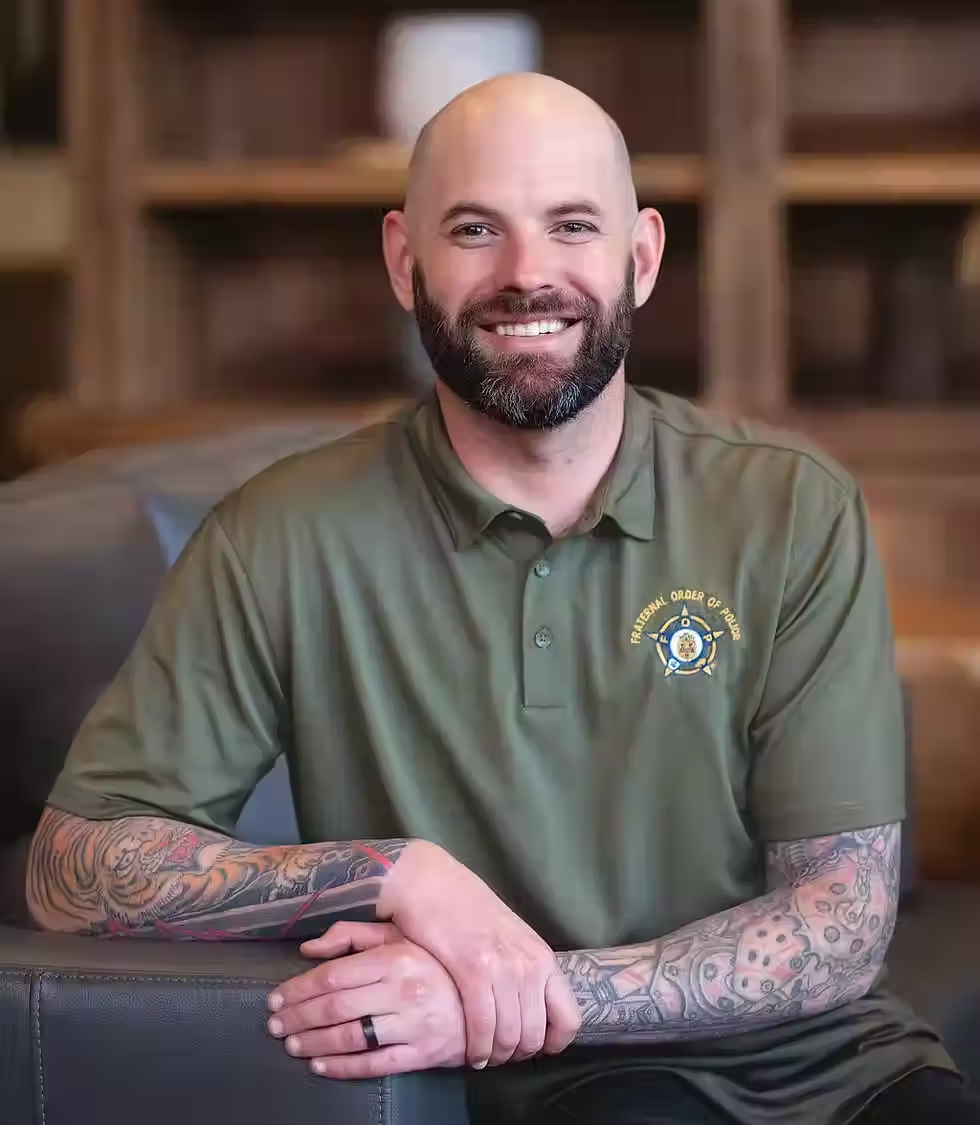
Austin Pederson, Executive Director of Chateau Health and Wellness
Brings over eight years of experience revolutionizing mental health and substance abuse treatment through compassionate care and innovative business strategies. Inspired by his own recovery journey, Austin has developed impactful programs tailored to individuals facing trauma and stress while fostering comprehensive support systems that prioritize holistic wellness. His empathetic leadership extends to educating and assisting families, ensuring lasting recovery for clients and their loved ones.